Marine Alliance for Science and Technology for Scotland

Numerical & Experimental Hydrodynamic Modelling Forum

Welcome to the MASTS Numerical & Experimental Hydrodynamic Modelling Forum

This Forum provides a platform for knowledge exchange (information, education, networking), enabling the MASTS community to collaborate on Hydrodynamic Modelling Research. As models are used to simulate numerous oceanic activities, their broad range of applications require the expertise of a wide variety of disciplines.

Ocean wave

News & Events

Forum Activities

Working Groups

MASTS Research Forums and Working Groups form the major scientific driving force of the MASTS community. Working Groups (WG) provide opportunities for more focused Forum and cross-Forum activities, addressing specific time-bound challenges related to established or emerging areas of marine research, policy initiatives or regulation. 

A group of Puffin sea birds, sitting on a rock overlooking the ocean
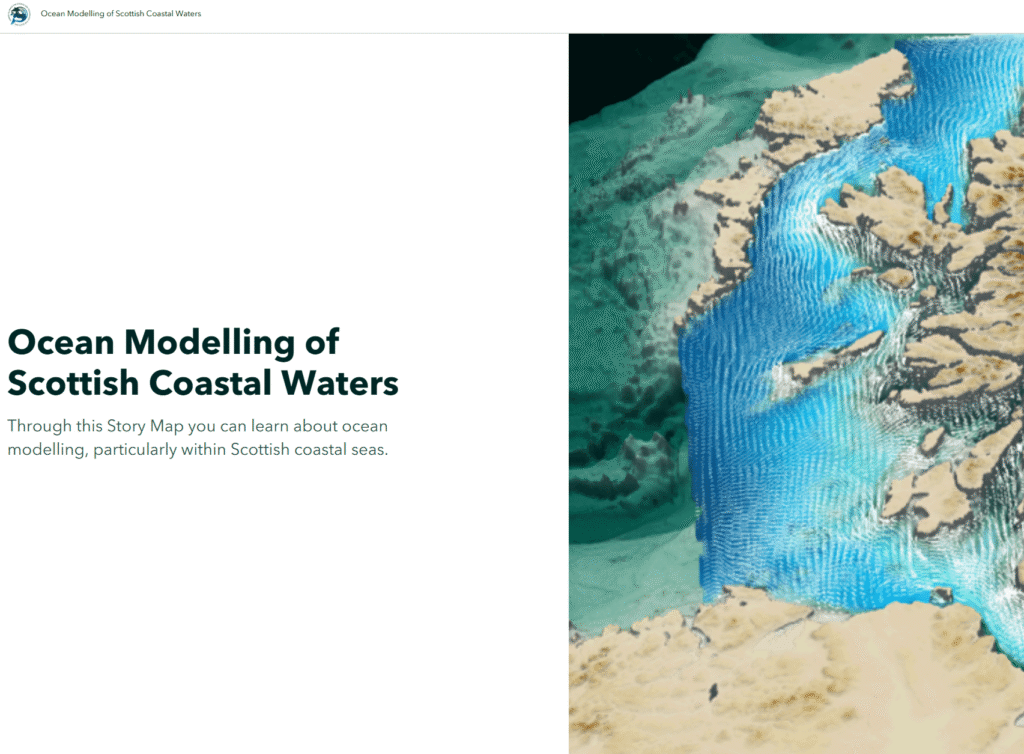
“Ocean Modelling of Scottish Coastal Waters – Development of an interactive Story Map”

The Forum has identified the need for an accessible, up-to-date overview of modelling of Scottish Coastal Waters. Even practitioners in the area can find it difficult to keep track of the broadening applications and new technological approaches. This Working Group aims to create a Story Map to establish an accessible resource.

For more information please click here

Workshops & Trainings

In 2023 and 2025 the Forum organised 2 successful in-person Software Carpentry Workshops at the University of St Andrews. Software Carpentry aims to help researchers get their work done in less time and with less pain by teaching them basic research computing skills.

The free courses were organised and conducted by the Forum and covered basic and intermediate concepts and tools of Linux, Python, Git and Unix Shell, including program building and design, version control, data management, task automation and Intermediate Research Software Development. Participants were encouraged to help one another and to apply what they learned to their own research problems.

2025 Instructors & Helpers: Olexandr Konovalov, James Morrison, Rory O’Hara Murray
2023 Instructors & Helpers: Patrick McCann, Anastasia Ellis, Philip Gillibrand, James Morrison, Rory O’Hara Murray, Simon Waldman

Open Forum Sessions

MASTS Open Forum Sessions aim at connecting the MASTS community with its diverse Research Forums and Steering Groups. At these online sessions, Forums “open their doors” to present their members’ work, network with the community and exchange ideas on Forum objectives and activities.

“Anthropogenic Energy in the Marine Environment” (2025)

A recording of this session is available on the MASTS YouTube Channel!

Speaker: Dr Rory O’Hara Murray (Forum Convenor; Scottish Government)

Offshore wind farms are becoming increasingly ubiquitous in our shelf seas. The recent ScotWind leasing round has set the scene for development in deeper North Sea waters. These deeper (>60 m) shelf seas are less dynamic than the shallower nearshore environment and undergo seasonal stratification, which in turn triggers the development of fronts, the spring plankton bloom, and enhances primary productivity across the shelf seas. Offshore wind farms structures could enhance vertical mixing though turbulence production, which has the potential to change shelf sea stratification. This brief introduction will set the scene for the open forum session exploring anthropogenic energy in the marine environment.

(June 2025)

Speaker: Dr Momchil Terziev (Steering Group member; University of Strathclyde)

Ships interact with the marine environment in a variety of ways including physical and chemical pollution. While chemical pollution is understood and increasingly regulated, the physical effects of the injected energy resulting from ship operation is not understood well. Energy pollution by ships includes the production of waves and injection of turbulence which may persist for regionally relevant timescales. This turbulence has been shown to mix layers of the ocean, affecting the natural pycnocline alongside inducing mortality in micro and macro organisms. This talk will summarise existing evidence and research of energy pollution by ships and discuss current approaches to modelling the phenomenon and related challenges.

(June 2025)

Speaker: Dr David Woolf (Steering Group member; Heriot-Watt University)

The most efficient means of harnessing power from a current in a channel (e.g. tidal stream) is by a “tidal fence” across the entire width of the channel. However, that is almost always impractical and therefore various array designs that leave “gaps” are proposed. Currents tend to avoid the turbines and pass through the gaps reducing efficiency. Array efficiency can be improved by obstructing flow through the gaps. To maintain navigation and migration, obstruction by roughening the seabed is the most likely option; this leads to “FLAIR” as a concept. The physical concept is quite simple, the practical and social parts are far more difficult! Roughening can be in the form of large solid objects or debris such as concrete or scrap metal, or can be through deliberate cultivation of seabed flora such as kelp. In either case, the approach may be antagonistic to conservation legislation, though in one sense this is perverse since without FLAIR the flow in the gaps (and therefore, “the environment”) will be altered by the array. Suggestions are welcome.

“Particle Tracking” (2024)

Recordings of this session are available on the MASTS YouTube Channel: Talk 1 / Talk 2

Speaker: Dr Philip Gillibrand, Oceanographer and Hydrodynamic Modeller at the Mowi Scotland Ltd Environment Team

Particle tracking models (PTMs) are powerful tools for simulating the transport and dispersion of material in the ocean. By assigning appropriate properties and characteristics to the particles, models can simulate, for example, the dispersion of dissolved chemicals, dispersal of living organisms, settling of particulate wastes and the beaching of floating plastics. Applications include oil spill response, search and rescue, academic research and coastal zone management. This presentation demonstrates the ease with which these different processes can be simulated in a PTM.

(August 2024)

Speaker: Soizic Garnier, Research Officer at the School of Ocean Sciences, Bangor University

Particle tracking models are extensively used tools for simulating the transport and dispersion of a large range of particulate material in the marine environment. With their increasing use, more user-friendly particle tracking codes have been developed and shared within the scientific community. This presentation will introduce one of them, OceanParcels and demonstrate how to set up and run a simple simulation.

(August 2024)

Forum Bursaries

The Forum is funding 2 applicants to attend the 8th Norway-Scotland Waves & Marine Hydrodynamics Symposium, held at the Royal Society of Edinburgh (RSE) between 22nd -23rd October 2025:

  • Victoria Marti (PGR) – University of Strathclyde
  • Zhiling Liao (ECR) – Heriot-Watt University
MASTS Annual Science Meetings

The MASTS ASM is a cross-disciplinary event that brings together the marine science community, with the aim of promoting and communicating research excellence and forging new collaborations. The event includes expert plenary speakers, general science and panel sessions, and e-posters.
Please see here for an overview of previous ASMs and programmes. 

Forum Resources

North Sea human-made, offshore structures (e.g. oil/gas platforms, offshore wind farms) provide a hard substrate habitat for benthic marine species which can spread between sites during their larval stage. Here, we aim to address how the installation of additional human-made structures, like new wind farms, or decommissioning of existing ones, like oil and gas platforms at the end of service, contribute to changes in larval connectivity. We use particle tracking model simulations to assess the ecological connectivity of benthic species in the northern North Sea during two contrasting years to highlight seasonal to annual variabilityRead more here

Barton, B.I., De Dominicis, M., Woolf, D.K. et al. The impacts of human-made structures on larval connectivity in the northern North Sea. Commun Earth Environ 6, 377 (2025). https://doi.org/10.1038/s43247-025-02346-6

Datasets:

The latest climate change evidence update on storms and waves has now been published by MCCIP.

This update, led by Dr Lucy Bricheno, from the National Oceanography Centre in Liverpool, indicates that more very severe winter storms will cross over the UK and Ireland in the future.

The newest climate models are generally able to consistently predict storm tracks, showing an increase in large and intense wintertime storms and a greater likelihood of successive storms and compound events. High-impact and low-likelihood events, such as the collapse of the Atlantic Meridional Overturning Circulation (AMOC), could strengthen the storm track and winter westerly winds over the North Atlantic. The models also show that even a gradual weakening of the AMOC could lead to stronger storms and larger storm surges. However, it is important to note that there is still considerable uncertainty regarding future changes to North Atlantic storms, much of which are driven by natural variability rather than long-term climate change.

The key ‘takehome messages’ are summarised on the MCCIP storms and waves evidence review page, which also contains a link to the updated review paper.
The Marine Science Coordination Committee (MSCC) and MASTS are working with ecosystem modellers across the UK to increase the impact of ecosystem models on policy development and management. Learn more about MASTS members and their work with MSCC here.

Forum Objectives

Established within the Dynamics and Properties of Marine Systems Research Theme, the MASTS Numerical and Experimental Hydrodynamic Modelling (NEHM) Forum exists to promote numerical and experimental hydrodynamic modelling within Scotland, and to provide a platform for bringing together the scientific community to address current and future research needs.

Both numerical and physical models are used to simulate estuarine, coastal and ocean-scale flows, and as such have a broad range of applications, from environmental assessment, to marine energy, to climatology. MASTS members have research expertise in these areas, which can be seen below.

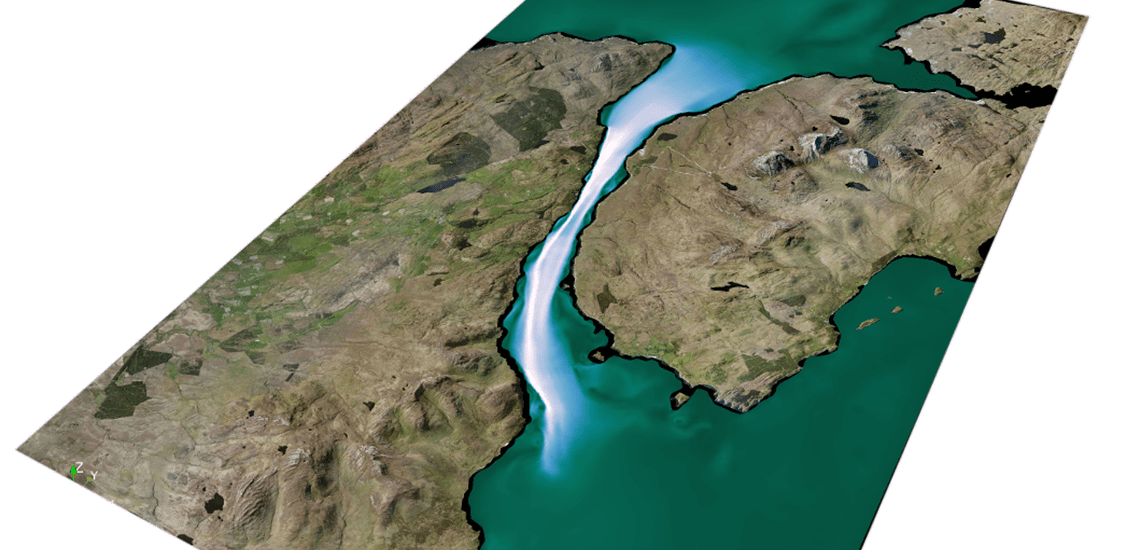
Sound of Islay LES simulation. Dr. Angus Creech, University of Edinburgh.
  • Interacting with the different communities which have an interest in hydrodynamic modelling.
  • Engaging with new partners and promoting collaboration across disciplines to further hydrodynamic modelling research.
  • Ensuring greater output and providing databases for those interested in hydrodynamic modelling.
  • Discussing and helping to deliver the best scientific knowledge available.

Forum Steering Group

Forum Convenor:
Rory O’Hara Murray (Marine Directorate, Scottish Government)

Physical Oceanographer | Co-chair of the National Partnership for Ocean Prediction (NPOP) Coastal Modelling and Applications Activity Group | Chair of ScotMER physical processes receptor group science and research

Interests:

  • coastal-ocean hydrodynamic modelling.
  • science topic leads for Marine Renewable Energy (MRE) oceanography and the development of hydrodynamic models.
  • possible impacts of MRE on physical oceanographic processes and the wider marine environment
  • numerical hydrodynamic and biogeochemical models, insight into complex marine physical processes and their interactions with MRE developments
  • aquaculture, emergency response and marine conservation/spatial planning modelling applications
Forum Convenor:
Soizic Garnier (Bangor University)

Research Officer at the School of Ocean Sciences

Interests:

  • impact of salmon lice on salmon farms and wild salmon populations
  • dispersion of shellfish larvae to support fisheries management
  • Hindcasting the transport of sailor casualties to aid in the identification of a World War II shipwreck for archaeological studies
  • Characterise marine heatwaves in future climate projections and assessing their impact on ecosystems
  • Reservoir modelling 
Alan Cuthbertson (University of Dundee)

Reader

Interests:

  • Experimental and analytical modelling of environmental fluid mechanics problems, cohesive and non-cohesive sediment transport processes, and geophysical flows
  • Flow-sediment interactions at multiple scales
  • Stratified and buoyancy driven flows
  • Environmental hydraulics associated with aquaculture
  • Geophysical fluid dynamics and geohazards
David K Woolf (Heriot-Watt University, Orkney Campus)

Associate Professor (Reader in Marine Physics)

Interests:

  • Interaction of currents and tides with marine renewable energy
  • Dispersion in the marine environment
  • Combining earth observation, in situ data and model output
Dominic van der A (University of Aberdeen)

Senior Lecturer

Interests:

  • Coastal engineering, with a particular focus on the hydrodynamics and sediment transport processes that occur near the seabed as a result of waves
  • Fluid mechanics, interaction between wave hydrodynamics and coastal vegetation
  • Improve our understanding of fundamental processes in the coastal zone, and to develop new and more efficient tools that engineers can use, particularly when addressing the environmental challenges of climate change and sea level rise
Dmitry Aleynik (SAMS/Scottish Association for Marine Science)

Principal Investigator in Physical Oceanography

Interests:

  • Turbulence and mixing induced by tidal interaction with topography
  • Numerical hydrodynamic applications such as non-hydrostatic (MITgcm), unstructured (FVCOM) ocean and weather forecast (WRF) models running on High Performance Computers
Emma Tyldesley (University of Strathclyde & Atlantic Salmon Trust)

Research Associate | Department of Mathematics and Statistics

Interests:

  • Background in maths, oceanography, population dynamics, fisheries and environmental impact assessment
  • Using regional ocean hindcasts and climate projections with empirical zooplankton data to model impacts of climate change on zooplankton and consequences for planktivorous fish and their predators
  • Developing marine indicators for salmon survival and embedding these in salmon management tools
  • Art-science engagement: member of the Scotland-based art-science collective Waterways
Erin King (SEPA/Scottish Environment Protection Agency)

Senior Specialist Scientist (Oceanographer)

Interests:

  • Applications of numerical modelling for environmental risk assessment
  • Biogeochemical modelling and eutrophication risk assessment
  • Nonlinear wave current interactions and sediment transport
  • Coastal sediment transport and headland bypassing
  • Background experience in experimental acoustical oceanography and hydrographic surveying
Jennifer Graham (SAMS/Scottish Association for Marine Science)

PI Physical Oceanography

Interests:

  • Ocean modelling, inc. regional model development and the impact of model resolution.
  • Exchange between shelf seas and open ocean.
  • Ocean variability, and role of ocean-atmosphere-ice interactions.
  • Role of physical oceanography in understanding ecosystem change/variability.
Momchil Terziev (University of Strathclyde)

Lecturer in Naval Architecture

Interests:

  • Specialising in applied Computational Fluid Dynamics modelling
  • Work includes ship hydrodynamics, renewable energy device modelling and optimisation
  • Other interests include discretisation uncertainty, applied turbulence modelling and inland waterways.
Pal Schmitt (Queen’s University Belfast)

Senior Lecturer | Marine Engineer & Naval Architect

Interests:

  • Marine Renewable Energy
  • Fluid Structure Interaction
  • Coastal Engineering
  • Wave Vegetation Interaction
  • Field and Laboratory Experiments
Stevie Brain (Bakkafrost Scotland Ltd.)

Environmental Modeller

Simon Waldmann (Heriot-Watt University)

Assistant Professor

Interests:

  • Environmental interactions of offshore renewable energy, and policy implications of these.
  • Implications of offshore wind scale-up.
  • Inter-array effects in tidal energy.
Secret Link
MASTS Resources

We’re working behind the scenes to bring you a suite of useful, and updateable, resources including: 

  • Find an expert
  • Find facilities & equipment
  • MASTS Publications


If you would like to be updated when the resources section is live please let us know.